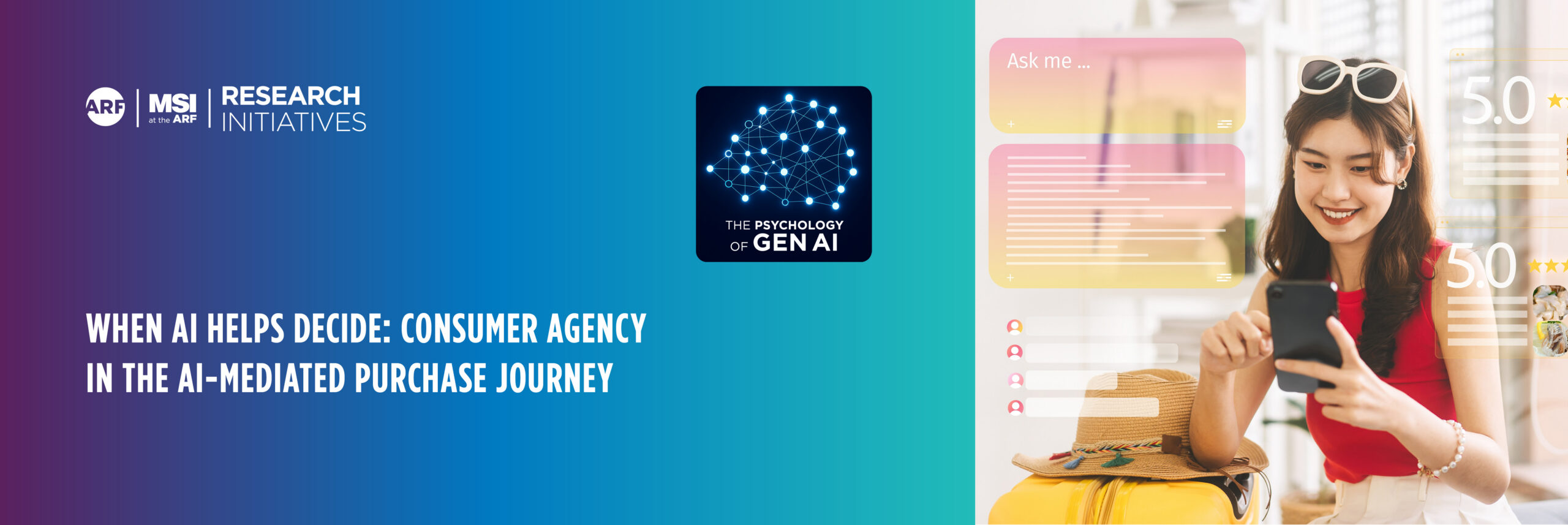
AI is transforming how organizations generate insights and forecast outcomes, but questions remain about reliability and the need for human oversight. On September 14-15 in NYC, industry and academic leaders gathered to discuss integrating AI into analytics workflows and maintaining transparency.
Member Only Access
Getting noticed is only the beginning. As consumers discover brands through search engines, social platforms, creators, retail environments and AI-powered tools, visibility alone no longer guarantees relevance or consideration. In her latest article for The Advertising Club of New York, Tracy Adams, PhD, Senior Director of Research & Insights at the ARF, examines how the changing discovery landscape is reshaping the relationship between brands and consumers. Drawing on recent ARF and industry research, she explores why recognition, relevance, credibility and trust are increasingly important to turning brand exposure into meaningful consumer engagement.
Member Only Access
AI-optimized, omnichannel campaigns are changing how media are planned, activated and measured. Drawing on in-depth interviews with advertisers and providers, the ARF Cross-Platform Measurement Council’s Attribution Working Group examined omnichannel campaign tools such as Google Performance Max and Meta Advantage+, exploring their potential to simplify execution, optimize across channels and improve performance. Their research also identified important tradeoffs, including transparency, testing capabilities and ongoing measurement and governance challenges.
Member Only Access