purchase funnel

  • Article

How Marketers Feel about Today’s Measurements

The article suggests that in the traditional funnel metaphor, consumers start with a set of potential brands and methodically reduce that number to make a purchase.

But today, they say, the funnel concept fails to capture all the touch points and key buying factors resulting from the explosion of product choices and digital channels, coupled with an increasingly discerning, well-informed consumer.

Their research showed that the proliferation of media and products requires marketers to find new ways to get their brands included in the initial-consideration set.

McKinsey also found says that there is a shift away from one-way communication—from marketers to consumers—toward a two-way conversation. This means marketers need a more systematic way to satisfy customer demands and manage word-of-mouth.

Access full article from McKinsey


Member Only Access

When Media Effects Multiply: Evidence of Cross-Funnel Synergies

  • ARF
  • JOURNAL OF ADVERTISING RESEARCH

Media planning frameworks often assume that channels operate independently or compete within the same funnel stage. This research challenges that assumption by demonstrating that the largest performance gains come from cross-funnel synergies, particularly between upper-funnel television, middle-funnel digital media and lower-funnel promotions. Using a large-scale CPG dataset and a novel estimation–optimization approach, the study shows that explicitly modeling these interactions can materially improve media allocation decisions while also significantly increasing incremental revenue.

Member Only Access
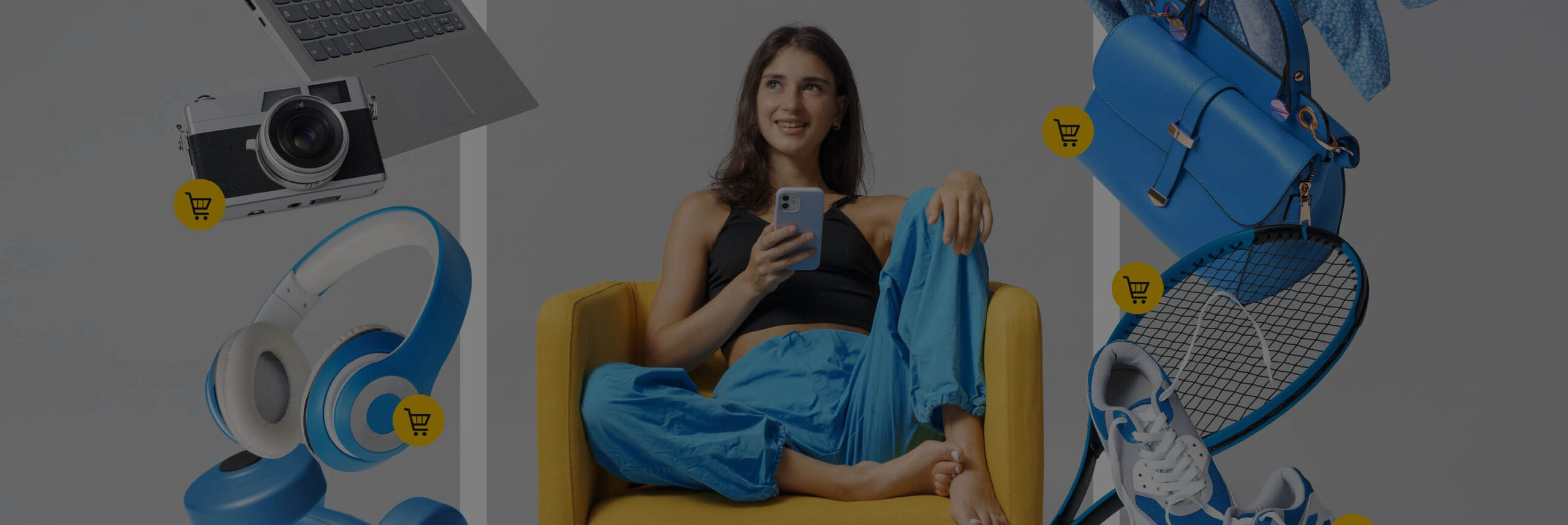
The Attribution Working Group Drills Down into Shoppable Ads

  • by Matthew Yoli, Young Pros Officer
  • CROSS-PLATFORM MEASUREMENT COUNCIL

On February 19, 2026, the ARF Attribution Working Group hosted a deep‑dive session focused on the rapidly evolving landscape of Shoppable Ads, exploring how new formats are emerging, how they function across platforms, and how measurement practices are adapting. The discussion delved into shoppable ads across retail media networks, social platforms, display inventory, and connected TV environments, highlighting how these formats are redefining the relationship between media exposure and commerce outcomes. The conversation built on the Working Group’s broader initiative to evaluate five emerging advertising channels, an effort informed by industry interviews and an agency/advertiser survey. The session was moderated by Chip Godfrey (Director, Data Strategy, J.D. Power, and a member of the ARF Attribution Working Group). The panelists were Yannick Koger (Sr. Manager, NA Retail Measurement Solutions, Pinterest), Jared Oliver (Manager, Advanced Analytics & Modeling, Ocean Spray and a member of the Attribution Working Group), and Phil X. Jackson (Director, Global Digital Marketing Effectiveness & Innovation, Haleon).

Member Only Access

  • Article

How to Engage Black Audiences

The article suggests that in the traditional funnel metaphor, consumers start with a set of potential brands and methodically reduce that number to make a purchase.

But today, they say, the funnel concept fails to capture all the touch points and key buying factors resulting from the explosion of product choices and digital channels, coupled with an increasingly discerning, well-informed consumer.

Their research showed that the proliferation of media and products requires marketers to find new ways to get their brands included in the initial-consideration set.

McKinsey also found says that there is a shift away from one-way communication—from marketers to consumers—toward a two-way conversation. This means marketers need a more systematic way to satisfy customer demands and manage word-of-mouth.

Access full article from McKinsey


Member Only Access
  • Article

Television of Tomorrow Conference Insights

The article suggests that in the traditional funnel metaphor, consumers start with a set of potential brands and methodically reduce that number to make a purchase.

But today, they say, the funnel concept fails to capture all the touch points and key buying factors resulting from the explosion of product choices and digital channels, coupled with an increasingly discerning, well-informed consumer.

Their research showed that the proliferation of media and products requires marketers to find new ways to get their brands included in the initial-consideration set.

McKinsey also found says that there is a shift away from one-way communication—from marketers to consumers—toward a two-way conversation. This means marketers need a more systematic way to satisfy customer demands and manage word-of-mouth.

Access full article from McKinsey


Member Only Access
  • Article

Grounding AI in Human Truth: Getting Simulation Closer to Reality

The article suggests that in the traditional funnel metaphor, consumers start with a set of potential brands and methodically reduce that number to make a purchase.

But today, they say, the funnel concept fails to capture all the touch points and key buying factors resulting from the explosion of product choices and digital channels, coupled with an increasingly discerning, well-informed consumer.

Their research showed that the proliferation of media and products requires marketers to find new ways to get their brands included in the initial-consideration set.

McKinsey also found says that there is a shift away from one-way communication—from marketers to consumers—toward a two-way conversation. This means marketers need a more systematic way to satisfy customer demands and manage word-of-mouth.

Access full article from McKinsey


Member Only Access
  • Article

Smart Segments, Better Retail Media

The article suggests that in the traditional funnel metaphor, consumers start with a set of potential brands and methodically reduce that number to make a purchase.

But today, they say, the funnel concept fails to capture all the touch points and key buying factors resulting from the explosion of product choices and digital channels, coupled with an increasingly discerning, well-informed consumer.

Their research showed that the proliferation of media and products requires marketers to find new ways to get their brands included in the initial-consideration set.

McKinsey also found says that there is a shift away from one-way communication—from marketers to consumers—toward a two-way conversation. This means marketers need a more systematic way to satisfy customer demands and manage word-of-mouth.

Access full article from McKinsey


Member Only Access
  • Article

Leveraging Brand Lift

The article suggests that in the traditional funnel metaphor, consumers start with a set of potential brands and methodically reduce that number to make a purchase.

But today, they say, the funnel concept fails to capture all the touch points and key buying factors resulting from the explosion of product choices and digital channels, coupled with an increasingly discerning, well-informed consumer.

Their research showed that the proliferation of media and products requires marketers to find new ways to get their brands included in the initial-consideration set.

McKinsey also found says that there is a shift away from one-way communication—from marketers to consumers—toward a two-way conversation. This means marketers need a more systematic way to satisfy customer demands and manage word-of-mouth.

Access full article from McKinsey


Member Only Access